Booking conversations without the chaos

Independent artists lose gigs in the gaps between messages — a half-answered email, a date that lived only in a notes app, a follow-up that never left the phone.
MYSHOWBIZ keeps booking conversations next to the opportunity they belong to. When a presenter writes, you see the thread beside the gig details, the ask, and the status you already agreed.
You still write like a human. The difference is you stop rebuilding the story every time someone asks “are we good for Saturday?”
Why threads fall apart on the road
Booking work rarely fails because you cannot write a polite email. It fails because the context of that email lives somewhere else.
A venue name sits in a spreadsheet. The fee lives in a text. The hold dates are in your head. The last “sounds good — let me confirm with the room” is buried under a week of other messages. By the time you reply, you are reconstructing a conversation instead of continuing one.
That reconstruction tax is quiet. It costs five minutes here, ten there. Across a month of inquiries, it becomes the reason promising rooms go quiet.
The goal is not more messages. It is fewer places a single booking has to live.
What “one place” actually means
One place does not mean one inbox forever. It means that when you open an opportunity, the thread, the ask, and the status are already beside each other — so you are not hunting before you can answer.
In practice that looks like:
- One thread per opportunity instead of a scatter of inboxes
- Clear next steps so you know who owes a reply
- Context that travels with you from first inquiry to confirmed date

A calmer booking rhythm
Most artists already have a rhythm for writing songs. Booking needs a rhythm too — light enough to keep on a busy week, strict enough that nothing important depends on memory.
Before you write
Spend thirty seconds naming what you are asking for. A date. A fee range. A hold. A yes/no on a support slot. Vague openers create vague replies, and vague replies create more chase.
While the thread is alive
Treat every reply as a small status update. If the date moved, say so. If you are waiting on the room, say so. If you agreed a ballpark fee, put it where you will see it next to the conversation — not only inside the paragraph you sent.
When the booking firms up
The conversation should hand off cleanly into a gig record: date, people, documents, and money. You should not have to re-type what you already agreed just because the thread “won.”
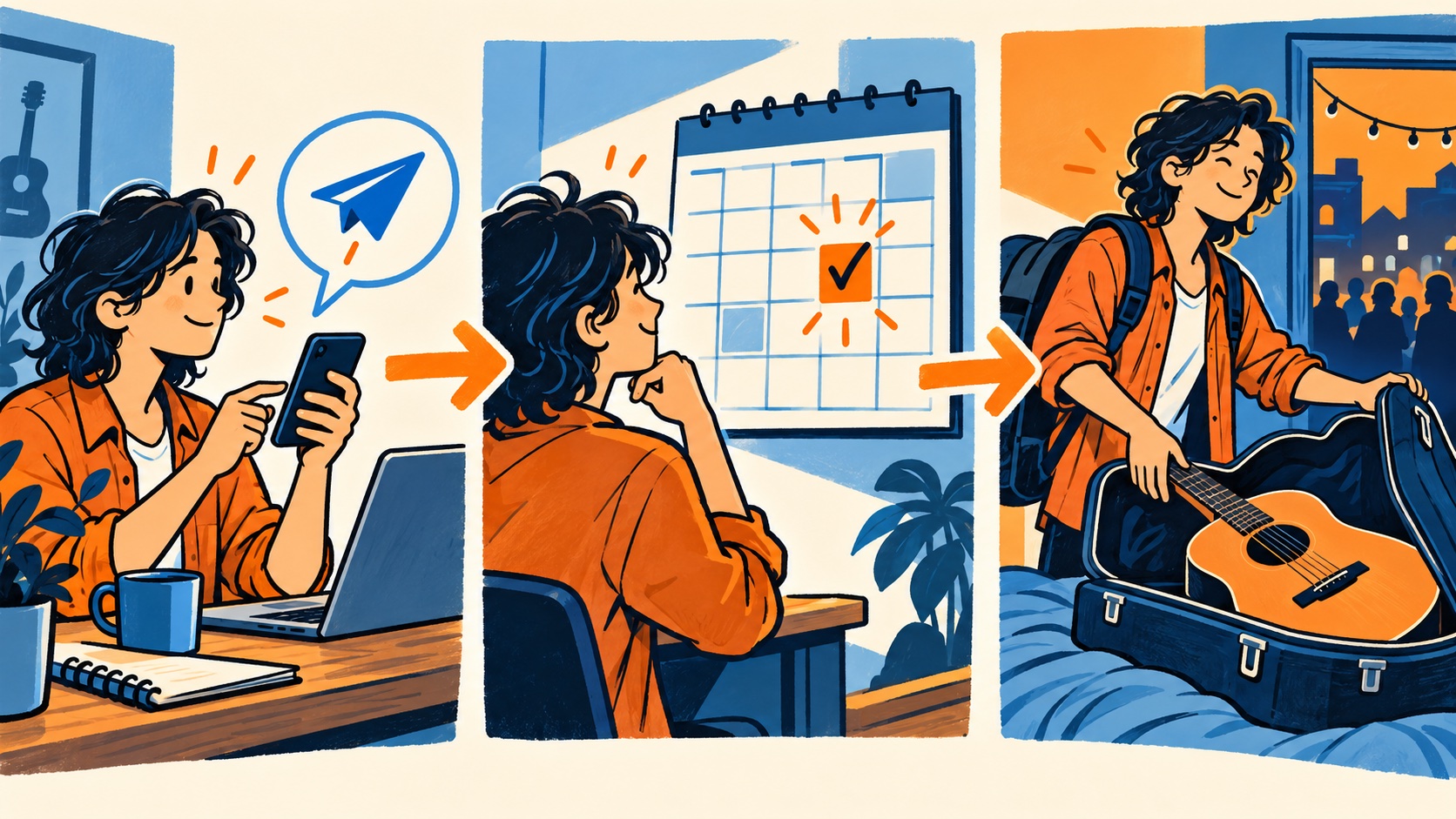
What changes in practice
Here is the difference artists notice first when conversations stop living in five apps:
- You answer faster — because the venue, date, and last ask are already on screen.
- You chase less — because it is obvious who owes the next message.
- You drop fewer holds — because soft dates are visible beside the thread, not only in a notes app.
- You sound more consistent — because you are not reinventing your story for every presenter.
None of that replaces taste, relationships, or a good set. It removes the admin fog that makes good work look unreliable.
A short scene from the old way
It is Thursday. A presenter reaches out about a Friday three weeks out. You remember talking to them in January. You search email. You check Instagram DMs. You find a screenshot of a calendar in your camera roll. You type a reply from a green room and forget to mention the load-in constraint you already knew.
They reply two days later: “We thought you were free that night?” You were. You just could not prove it from the phone in your hand.
The same scene with the thread attached
You open the opportunity. The earlier notes are there. The date is there. The last status is there. You answer in one pass — clear, human, complete. The conversation stays about the show, not about archaeology.
Keep the human tone
Tools should not turn you into a booking bot. Presenters can tell when a reply is generic. Keep your voice. Keep the small details that make a room want you.
What you should not keep is the scramble:
- Rebuilding the fee from memory
- Guessing which PDF was “final”
- Promising a date you already soft-held for someone else
Those are process problems, not personality problems. Fix the process and your personality gets more room.
A simple weekly check
Once a week — Sunday night or Monday morning — scan open conversations and ask three questions:
- Who is waiting on me?
- What date am I holding that is not confirmed?
- Which thread has gone quiet long enough to need a nudge — or a polite close?
That review takes minutes when every thread already sits with its opportunity. It takes an hour when you have to reassemble the week from inboxes.
Close loops on purpose
Not every quiet thread deserves another nudge. Some deserve a clean close: thank them, free the hold, move on.
Closing is kindness to your future calendar. Soft-holds that never resolve are how double-books and awkward apologies get made.
A short closing note template
Keep it human and short:
- Acknowledge the conversation
- State that you are releasing the date (if you were holding one)
- Leave the door open without demanding a reply
You are not burning a bridge. You are clearing fog.
Booking will always involve waiting. Venues move slowly. Calendars change. People ghost.
What does not have to be inevitable is losing a good room because the conversation lived everywhere except where you could act on it.