Keep contracts next to the gig
A contract that lives in email downloads is a contract you will not find when you need it.
When documents sit with the gig — deposit, load-in, cancellation terms — you open one place and see the agreement beside the date, the venue, and the money.
Paperwork will not make the show better. Losing it the week before certainly makes the week worse.
The week-before problem
Most contract stress does not happen at signing. It happens later, when something practical has to be true:
- What time is load-in, really?
- Who pays for parking?
- When is the deposit due — and did it clear?
- What happens if the room cancels indoors for weather?
Those answers usually exist. They are just buried: an attachment named FINAL_v3, a forward from a booker, a photo of a signed page in your camera roll.
If you cannot open the agreement beside the gig, you do not have a filing system. You have a scavenger hunt with a deadline.
Why “Downloads” fails artists
Folder trees assume desk time. Gig weeks do not. You need the right page from a phone in a van, not a carefully nested archive you built in January and never touched again.
Attaching documents to the gig flips the default: the show is the home; the PDF is a detail of the show.
What belongs with the gig
Not every file deserves equal weight. Start with the documents that change the night if they are wrong.
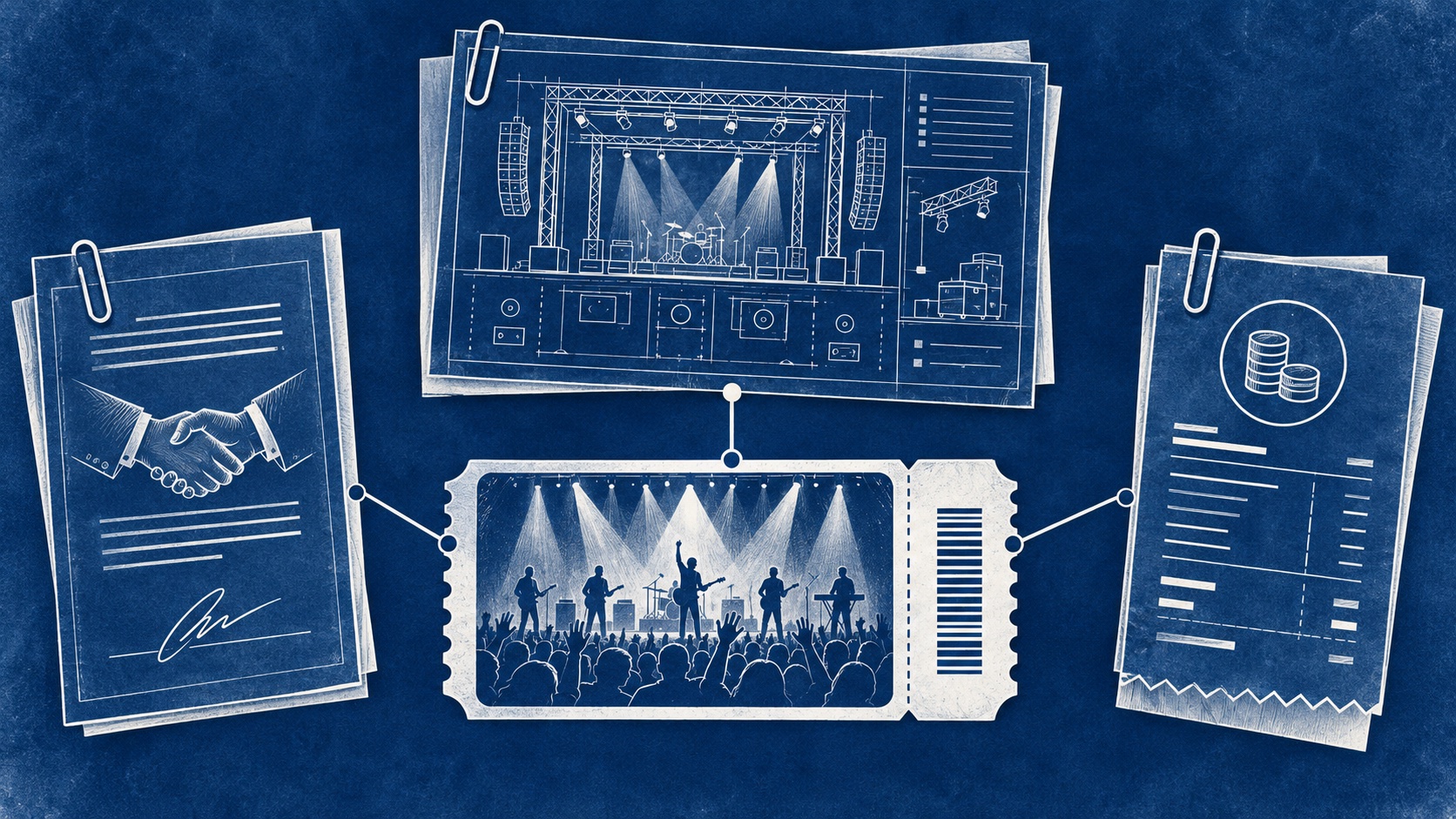
The core set
- The signed agreement or confirmation
- Rider or tech notes the room accepted
- Invoice or payment terms tied to that date
- Any access, parking, or hospitality notes that are easy to lose in chat
Nice to have nearby
- W-9 or tax forms already sent for that promoter
- Stage plot / input list versions you actually used
- Settlement notes after the show
You do not need a perfect archive on day one. You need one reliable home for the files that protect the date.
Why it matters on the night
When the agreement sits with the gig, a few things stop being emergencies:
- Load-in and access details are not buried in a thread
- Payment terms are visible before you chase an invoice
- Everyone on the bill can see the same source of truth
That last point matters for bands. Shared memory is not a plan. Shared documents are.
A practical example
You arrive to a room that says doors are earlier than you remembered. Instead of arguing from vibes, you open the gig, open the agreement, and read the line together. The conversation becomes factual in under a minute.
Or the deposit is late. You are not reconstructing the payment schedule from a March email. It is already next to the date and the fee.
A lightweight habit that sticks
Systems die when they ask for heroics. Build a small habit that fits a touring week.
- When terms are agreed, put the file on the gig the same day — not “when things calm down.”
- Name it like a human — venue, date, “signed” — so future-you can scan it fast.
- Update the gig status when something in the document changes (new load-in, revised fee).
- After the show, keep settlement notes with the same record so next year’s quote is not guesswork.
What to stop doing
- Screenshotting contracts into camera rolls as the primary copy
- Leaving “final” in five email threads with three different numbers
- Assuming the booker will resend everything the week of the show
Those habits feel fine until one Friday they are not.
Contracts are for clarity, not vibes
A good agreement is not about distrust. It is about shared clarity under pressure: money, timing, cancellation, and what “confirmed” means.
MYSHOWBIZ is built so that clarity can live next to the gig it protects — with the people, the calendar date, and the money — instead of floating in a downloads folder.
When multiple people need the same truth
Bands, duos, and artists with a manager or agent all hit the same failure mode: three people remember three different load-in times.
Putting the signed file on the gig does not end debate. It ends unfounded debate. Anyone on the date can open the same source instead of forwarding yet another “I think it said…” screenshot.
A quick roles checklist
- Artist / MD — knows what the stage needs
- Booker / manager — knows what was negotiated
- Venue contact — knows what the building can do
When those roles only meet inside a scattered inbox, small mismatches become night-of friction. When they meet on a shared gig record with the agreement attached, mismatches surface earlier — while there is still time to fix them.

Version discipline without bureaucracy
You do not need a legal DMS. You need a simple rule:
- Only one file is “current” on the gig.
- If terms change, replace or clearly supersede that file the same day.
- Do not keep five “almost finals” as if they were equally true.
Old drafts can live in email history. The gig should show the agreement you are actually working from.
Red flags that your system is slipping
- Someone asks “which PDF?” and the answer takes more than ten seconds
- The fee on the gig does not match the fee in the document
- Load-in exists in a chat and nowhere next to the date
- Settlement depends on a photo in someone’s camera roll
Any one of those is a nudge to re-home the file before the next show week.
You will still negotiate. You will still wait on signatures. You will still have odd rooms and odd clauses.
What you should not still be doing is hunting for the piece of paper that already decided the night — twenty minutes before soundcheck.